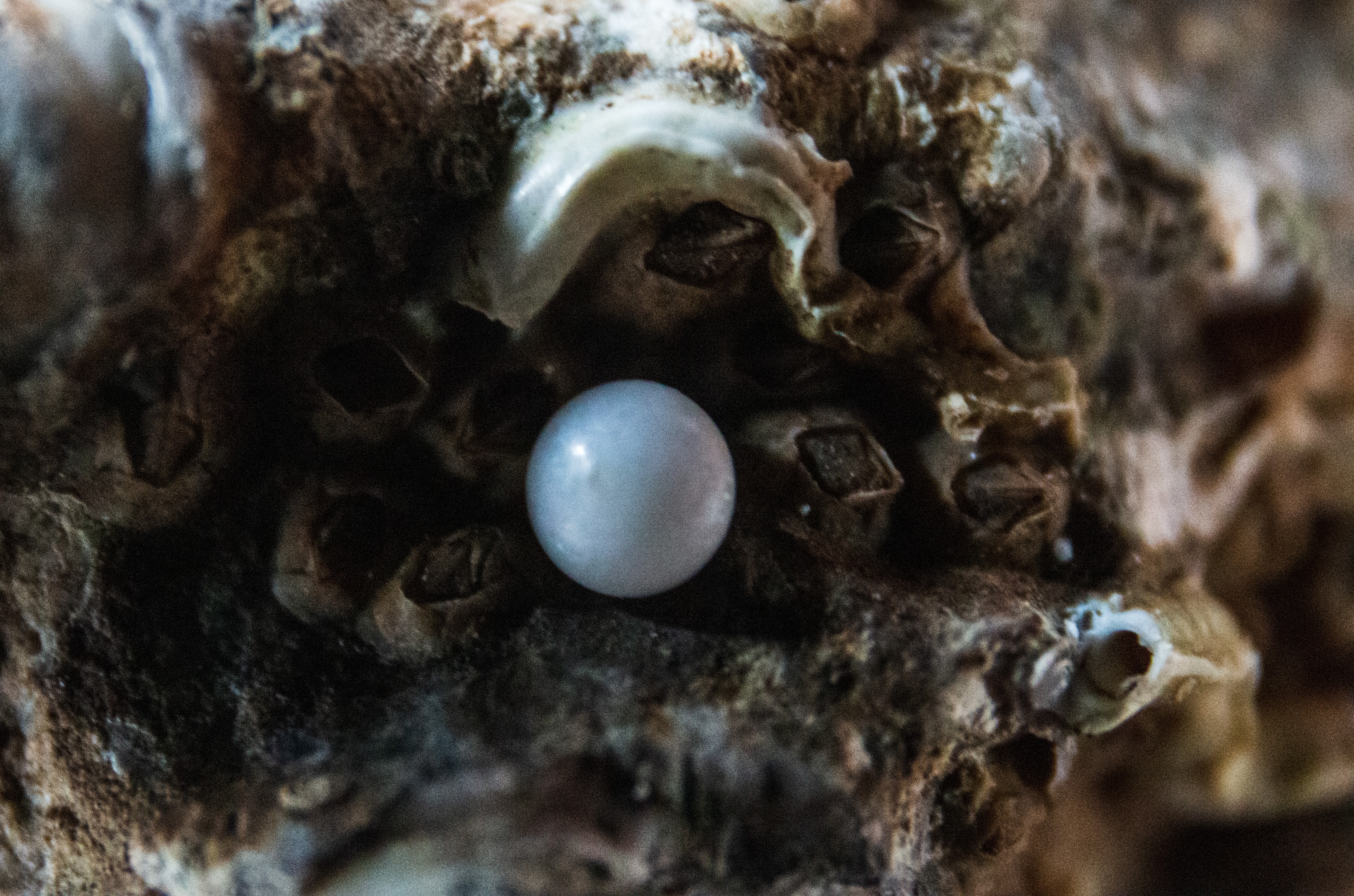
The real difficulty is to overcome how you think about yourself.
Maya Angelou
In psychology, there is a concept called “self-actualization”. In its simplest terms, it means using all your talents, resources and abilities to live up to your full potential as a human; to be the best version of yourself, or the greatest expression of who you are. From the time I was a child, I have been on a constant quest for self-awareness and self-improvement. I read self-help books. I take quizzes and personality tests. I know my Myers Briggs type and my Enneagram number. I read blogs and listen to podcasts and watch YouTube videos about everything from health and wellness to how to succeed in business.
A couple weeks ago, I had an epiphany that has been rather life altering. I started keeping a habit tracker in my journal a few months ago. For those of you who don’t know what a habit tracker is, it is exactly what it sounds like. You write down a list of habits you want to perform each day, and then you track the number of days you perform those habits. It is a method of encouraging and holding yourself accountable in order to reach your goals. It was the end of July and I was looking back over my habit tracker for the month. There were many more empty boxes than there were checked ones, and I was frustrated and disappointed in myself. As I began to think through why I hadn’t done better, I started to wonder how I would have felt if I had checked all the boxes. Would that have given me a sense of accomplishment? Would I feel disappointed because I should have had more habits on the list? How many accomplishments would have been enough for me to feel good about myself?
And then, this realization began to wash over me … this is how I have approached everything in my life. Literally everything I have ever tried to do – diets, exercise, doing well in school, doing a good job at work and in my career – I have done from a place of feeling inadequate, trying to achieve in order to be acceptable, or to try to catch up. Living this way has served me in one sense because it has helped me to excel in a lot of areas, but it always left me feeling empty.
Like I was trying to chase something that I could never catch.
But where did this mindset come from? I have some ideas …
The Fat Girl
I started gaining weight when I was about six or seven. I’m not really sure why. We didn’t eat out. We ate vegetables and fruits from my grandparents’ massive garden. We mostly ate meat we had raised ourselves. I was almost always outside playing. I played sports in school – not well, but I played! I was slower and more sluggish than most kids, but I was active. Maybe it was the laundry list of traumatic events that played out during my childhood. Or maybe it was some kind of physical ailment that went undetected. All I know for sure is that once I started getting fat, I never stopped.
I remember once when I was little, maybe 4 or 5, my dad made me a “to do” list. It included things like feeding my animals, riding my bike, spending time with my grandmother, etc. Although I can’t say for certain, my feeling as I think back on it is that this was done as a punishment of sorts for something I was supposed to have done but didn’t. I was incredibly timid when I was little, and my dad was a little on the gruff side, so I’m sure much of what I perceived as him being angry wasn’t as harsh as it seemed.
I don’t really remember feeling fat until I was about nine. I remember being at school one day and I was wearing a pair of blue shorts. A girl in my class pointed to my belly and said, “Margo! What is that in your shorts?!” I also remember around the same age, my mom leaving to go to Ohio. She and my dad had separated and we were living with my grandparents. We had some cousins who lived in Ohio and came to visit every summer. They were in town and my mom was planning to go back with them when they left. I didn’t know how long she would be gone and, as much as I loved my grandparents, I felt sad and anxious about being separated from my mom. I remember her making me step on the scale before she left. I weighed 95 pounds. I remember the sinking feeling as the dial on the scale came to a stop. I knew she was going to be angry and disappointed. I can still feel that sinking feeling as I stood there crying and insisting to her that the scale was wrong.
My family, particularly my mom, was unforgiving when it came to my size. She would often tell me I was so fat I was ugly, that boys wouldn’t like me because boys don’t like fat girls. She wouldn’t let me wear shorts in the summertime because my legs were too fat. On more than one occasion, she threatened to put me in the hospital and have my jaws wired shut so I couldn’t eat and would have to be fed intravenously. I don’t say that to cast a negative light on my mom. I know now that she must have had her own body issues, that if she felt that way about my body, then she must have felt that way about her own. I know that she loved me, and, in her own way, she was trying to help me.
But I didn’t know that then. I was a child. And being in my formative years and not knowing any better, I ‘agreed’ with that assessment and those words became my truth. That is what formed my belief system about my body, and, more importantly, about my worth. It charted a course for me to spend the next decades of my life believing that who I am is flawed. That I’m not good enough because I am fat. That nothing I do, nothing I achieve, nothing I excel at, no personality trait I have – nothing – matters as much as not being fat. I spent the next forty or so years of my life trying to diet and exercise, and failing at both, trying to fix my fat body. The more I tried, the fatter I became. At the same time, I tried to achieve in every other area in order to compensate for my lack of worth that arose from being fat.
I didn’t know much back then about health and wellness. I especially didn’t know that it comes from the inside out, not the other way around. I sought everything – love, health, acceptance, validation, my own worth and value – from the outside. My belief in myself rose and fell with every positive or negative word spoken to me. I became the ultimate people pleaser. I avoided conflict and confrontation at all costs. I equated conflict with not being loved or accepted and it made me unbearably uncomfortable. Honestly, it would literally keep me awake at night with dread if I thought someone was upset with me.
Jesus Loves You, BUT …
In the holistic health and wellness communities I’ve been a part of over the past few years, I’ve heard things like, “You are acceptable just as you are.” and, “You are worthy to have whatever you want in life.” and other thoughts and ideas along those lines. Those ideas did not mesh with my belief system, and I actually chafed against them. I grew up believing that we are born flawed and that only believing a certain way made us acceptable. Even then, once we accepted this belief system, we still aren’t good. Any goodness in us is only what is transferred to us by believing in Jesus.
Before I go any further down this path, I want to say that I am incredibly thankful for my Christian background and my church heritage. Church, while I do not attend any longer, introduced me to the idea of spirituality, and gave me a foundation and a context for God and for soul and spirit that I may have never found otherwise. More than anything, I am profoundly grateful for the people. The people that I went to church with loved me deeply. And, at that time in my life, love was the thing I needed above all else. Some of my closest friends to this day are people that I met there. And if there was anything in my youth that did make me feel like I mattered and that I had any value, it was the love of these precious people.
But, the more deeply ingrained I became in this belief system, the more it served to confirm what I had learned from my family … that I was inherently flawed. I wasn’t just unworthy and unacceptable because I was fat, I actually didn’t have any value to begin with! I was born into sin and my only hope for redemption was to believe in Jesus and carefully follow his instructions – instructions I could never live up to. And if anyone tried, I tried. A friend of mine, who I looked to for spiritual advice and wisdom, would often say that we deserve nothing. Any good that we experience is only because of the grace and mercy of Jesus. I often wondered about the contradictions. If we are so inherently bad, then why would God send his son to die for us? Did he just feel sorry for us? How could he create something and then find it worthless? But at that time in my life, I was afraid to explore those doubts and questions too deeply. My heart was not to be trusted. If my heart contradicted the Bible, then my heart was wrong. But the questions remained, simmering just below the surface until I had no choice but to ask them. But that story is for another time.
All this proof of my unworthiness, and all my attempts to overcome it, left a gaping hole inside me. I spent my life trying to prove that I was acceptable … trying to earn the love of a God who I was told to think of as a father … trying to gain the love and acceptance of my family and peers by doing everything I possibly could to compensate for being fat. This unconscious, underlying feeling of unworthiness shaped every choice I made.
Over the past few years, I have asked the hard questions that I was afraid to ask when I was younger. I have made so much progress and have overcome so many of my old thought patterns and limiting beliefs. But I never fully realized how deep this feeling of unworthiness went. I didn’t realize that this was the filter through which I processed all my choices, until I had this breakthrough and began to think through and explore the reasons.
So much of what we struggle with and what limits us happens on an unconscious level. The events and circumstances of our lives that develop our belief system kind of burrow into us so slowly and consistently over the months and years that they become the lens through which we view ourselves and everything around us without us realizing it. They weave themselves into the fabric of who we are, and we don’t recognize that they are limiting beliefs and that they are keeping us from living up to our full potential, from being the greatest expression of ourselves. So, they stay just below the surface until we begin to do the inner work, to ask the hard questions, to become more self-aware. I have been seeing a therapist and meditating and getting neural integration adjustments and doing the work for several years now, and I only recently discovered this about myself. It’s like we spend the first half of our life learning and taking it all in, and the second half working through it all to weed out and fine-tune what doesn’t serve us in becoming the greatest expression of ourselves.
As I’ve done this inner work, I have begun to realize that if there is anything we can trust, it is our heart! Even from a Christian perspective this is true. In the same book Christianity points to to tell us we have to follow the rules, we are also instructed to guard our heart – above all else – because it determines the course of our life. We are told that good advice lies deep within our heart and that a person of understanding will draw it out. I have realized that it’s not our actions that make us valuable … it’s our humanity. The fact that we exist means that we have value. Our actions help us to self-actualize, to become the best version of ourselves and to reach our full potential. But even those of us who do not reach our full potential and who do not put in the effort … we still matter. We still have purpose.
And if our mere existence means that we have value, then we don’t ever have to do another thing to be more acceptable. If you or I never take one more step toward self-improvement, we’re still worthy of all life has to offer, and we have just as much value as if we did every single thing right! And if that’s the case, then all the steps we do take toward self-improvement and growth are plusses, not attempts to fill in gaps. This shift in mindset has given me a sense of peace and freedom that I have not felt in a while. This means that it’s okay to do what I love and what I desire to do, because there’s nothing that I have to do.
I think this is one of the most crucial lessons we can learn … that our value and our worth are inherent. If the Bible is true, then even God must think we’re pretty incredible for him to have made the sacrifice he did to save us. Every single person on the planet – regardless of how they look, what they do, even what they believe – has value. Whether or not we accept that and live up to our potential, that part is up to us. And that potential, that best version of ourselves, is not some end result we are trying to achieve. The greatest expression of who we are is in the habits we practice and the choices we make every day. This means that even if we have never taken any steps toward self-improvement, we can be the best version of ourselves and the greatest expression of who we are … today. We can choose to live the healthiest life we can imagine … today. We can choose to be authentic in the words we speak and the dreams we chase in this moment. Whatever our values are, whatever we desire to do in this world, whatever we want to be, to do or to have – go after it now. If we consistently do this, then the end result will take care of itself. Let us ask different questions of ourselves. Instead of asking what we need to do or who we need to be, let’s ask questions like …
What do I love?
What do I desire?
What do I want to become as a person? As a co-creator with the universe? As a connected human being in the whole of humanity?
Habits are important. Habits are what help us achieve our goals and desires. But they are not what gives us value. We are no more or less valuable because we do or do not achieve a goal. We may not reach self-actualization. We might not discover all that we are capable of. But we are valuable. We are important. We are worth the effort.
Have you struggled with feelings of unworthiness? Or have you always recognized your value? I would love to hear your stories!
 Lessons From the Rearview